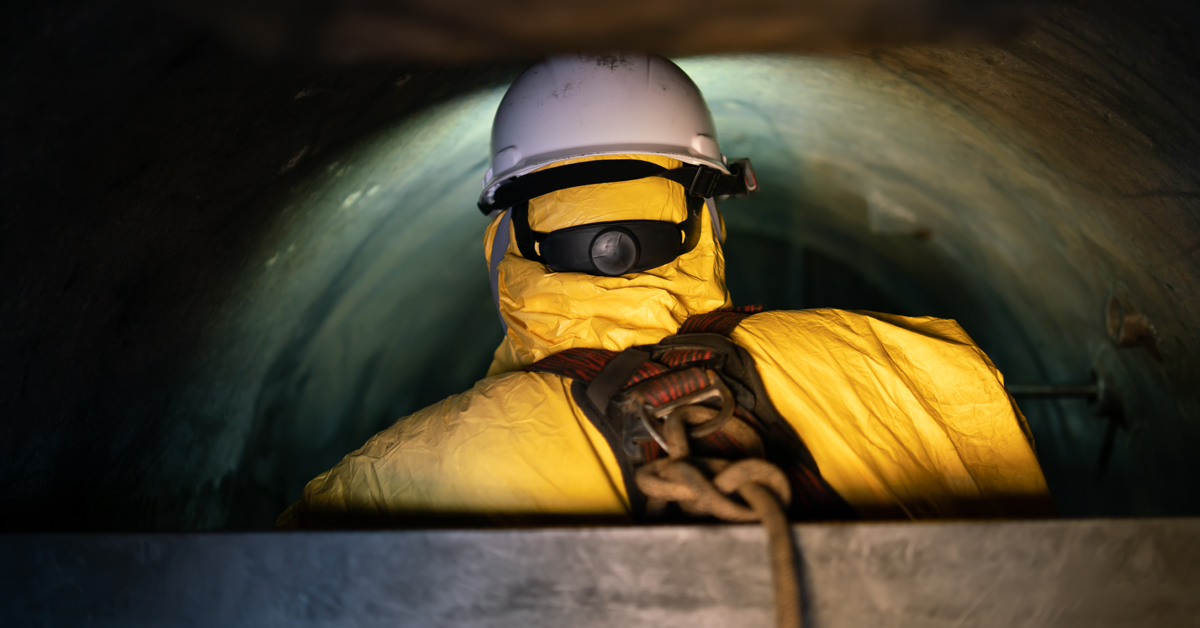
Key Takeaways
- Buy the whole system, not one part. A workable retrieval setup is the anchorage, device, line, harness, connectors, and atmosphere support matched to your opening, not just a tripod.
- Plan non-entry rescue first.
- Geometry, footprint, depth, and offset access decide tripod versus davit and the right winch long before brand or catalog category.
- Matching components and documentation, such as a 3M DBI-SALA setup, holds up better than parts pieced together after the fact.
- Include ventilation and gas monitoring in the same order.
The hard part of buying a confined space retrieval system usually isn’t finding a tripod or a winch. It’s confirming the full setup will actually work over your opening, with your entry path, depth, harness configuration, and non-entry rescue plan under OSHA 1910.146. A vertical tank hatch, a vault with limited overhead room, and a lateral or offset entry don’t call for the same equipment — even if every purchase request starts with the same shorthand: “We need confined space rescue gear.”
The key to the right setup is understanding that a workable system isn’t just a tripod bundle. It’s the anchorage structure, retrieval device, line, harness, connectors, and supporting ventilation and atmospheric monitoring that make the whole thing usable in the field.
We built this guide for safety managers and entry supervisors who need to choose professional-grade retrieval equipment with confidence, match the system to the space, and buy the right kit the first time.
What Counts as Confined Space Rescue Equipment
Confined space rescue equipment covers the tools used to retrieve, support, monitor, and protect authorized entrants in and around a permit-required confined space. The retrieval system is the core rescue component, but it isn’t the whole setup.
At a minimum, most confined space retrieval equipment decisions involve:
- Anchorage: a tripod, davit arm, or other approved support structure
- Retrieval device: a confined space rescue winch, hoist, or compatible mechanical device
- Line: the lifeline or retrieval line connected to the entrant
- Body support: a confined space rescue harness or belt suited to retrieval use
- Connectors: compatible hardware between the device, line, anchorage, and harness
- Atmosphere support: ventilation and gas monitoring where the space requires it
For procurement, the question isn’t “Do we own a tripod?” but whether the entire system matches the space, entry method, and rescue plan.
Non-Entry vs Entry Rescue: Why Retrieval Comes First
For permit-required confined spaces, OSHA 1910.146 and retrieval lines are the reference point when you plan retrieval and rescue. OSHA’s confined-space framework leans heavily on planning before entry, including retrieval methods where they can be used without adding risk to the entrant or the rescuers.
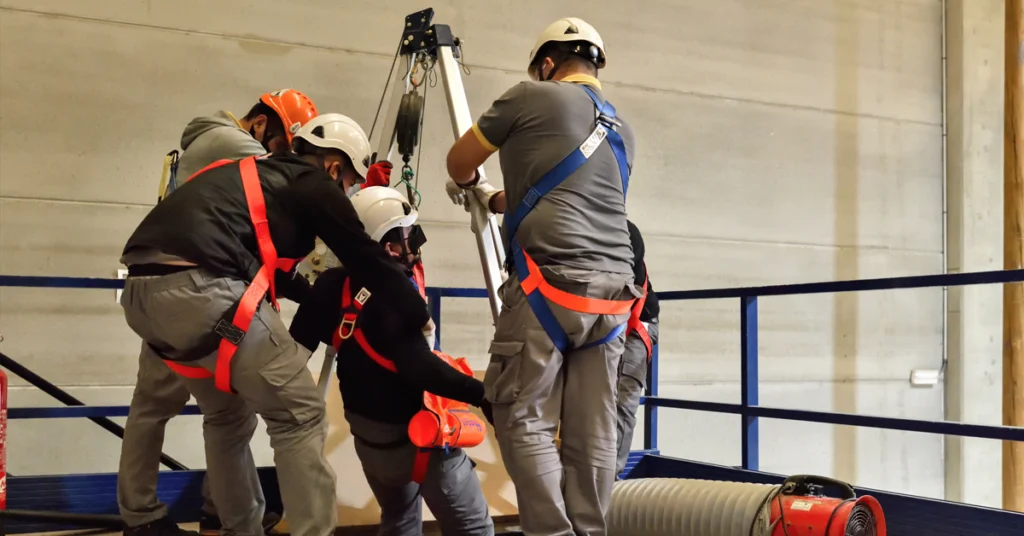
This is why non-entry rescue is the first planning layer. If the entrant can be pulled from outside the space using a line, harness, winch, and anchorage, the rescue never requires sending another person into the same hazard. That’s the whole point of a properly selected confined space retrieval system.
At the same time, entry rescue still has to be on the table when non-entry retrieval isn’t practical. A horizontal plenum, an internal obstruction, an offset ladder, or a tight path that can snag the entrant may force a broader rescue plan. Be sure to sort that out before the permit is issued, not after.
Retrieval Systems: Tripod, Winch, and Line Working Together
In the field, a retrieval system only works when every component is compatible. The tripod or davit provides the overhead or offset anchorage while the winch or hoist manages controlled raising and lowering. The line ties that mechanical advantage to the entrant’s harness, and connectors close the loop without adding weak points or awkward angles, making the system truly interdependent.
Before you buy, check three things:
- Can the anchorage sit where it needs to sit without fouling the opening?
- Does the winch or hoist mount properly to that structure?
- Does the harness attachment leave a usable retrieval path given the entrant’s body position and PPE?
This is where established professional brands earn their keep. The setups we see hold up best are the ones standardized around a single manufacturer’s system, such as 3M DBI-SALA, because matching components, instructions, and documentation at purchase is far easier than reconciling parts pieced together after the fact.
Rescue Tripods: How to Choose
A confined space rescue tripod is the familiar pick for vertical entries like manholes, tanks, and vaults. It’s portable, quick to position, and well suited to straight-line retrieval when the opening geometry cooperates. Here’s a look at what actually drives the selection:
| Selection Point | What to Look For | Where Problems Show Up |
|---|---|---|
| Height | Enough clearance for the device, line path, and entrant movement | A taller tripod still fails if the work area cannot support the footprint |
| 7 ft vs 9 ft | Match usable clearance, storage, transport, and entry depth | Buying by height alone instead of usable system geometry |
| Footprint | Stable placement around the opening | Vault edges, grating, railings, or nearby equipment block the legs |
| Material | Duty-rated construction appropriate for the work environment | Weight, corrosion exposure, and transport demands are ignored |
Davit arms are worth a look when the opening is offset, the tripod footprint won’t fit, or the retrieval path needs to sit away from the support base. But always keep in mind that the right answer comes from the space, not the catalog category.
Winches, Hoists & Descent Devices
The confined space rescue winch is the mechanical heart of many non-entry systems. Its job is to control line movement so that the entrant travels a predictable path up or down. Hoists and descent devices show up in related rescue or access setups, but they earn their spot based on the actual task, not because they look interchangeable.
| Device type | Best fit | Buying check |
|---|---|---|
| Retrieval winch | Raising or lowering an entrant through a planned access point | Mounting compatibility, line length, and control method |
| Hoist | Controlled lifting applications within the system design | Use case, anchorage compatibility, and manufacturer instructions |
| Descent device | Lowering or controlled descent where the rescue plan calls for it | Whether it fits the rescue method and operator training |
The bottom line is simple: Don’t separate device selection from the space. Depth, line path, edge protection, mounting position, and operator access all decide whether the device is practical once you’re standing at the opening.
For teams building out a full setup, a multi-purpose retrieval device makes sense when the work involves more than one access method, or when a single device has to support a broader rescue configuration.
Harnesses & Connectors
The harness isn’t an accessory you bolt on at the end of the order. The confined space harness you choose affects body position, retrieval attachment, mobility, and how well the entrant works with the retrieval line.
- For confined space work, pick a harness matched to the entry and retrieval method, not a general fall-protection harness grabbed off the shelf.
- Attachment location also matters — so does whether the worker can climb, crawl, or pass through the access point without snagging hardware.
- Treat connectors as part of the same system. Confirm that carabiners, snap hooks, mounting brackets, and line terminations match the manufacturer’s instructions and the rescue plan. A professional-grade system is only as usable as its least-compatible connection.
When the entry plan calls for a vertical access package, a dedicated confined space entrant personal kit simplifies the body-gear side of the purchase, especially for crews standardizing equipment across similar spaces.
Ventilation & Atmosphere
Even though ventilation isn’t part of the lifting system, it still belongs in the same buying conversation. Blowers, ducting, and air ventilation systems support the entry environment when the hazard assessment calls for atmospheric control.
Start by answering some practical questions: Where does the air need to move? How will the ducting be routed? Does the ventilation gear crowd the tripod, davit, line path, or entrant movement? A retrieval setup that looks clean on paper can get tight at the opening once the blower and ducting go in.
Pre-Built Confined Space Rescue Kits
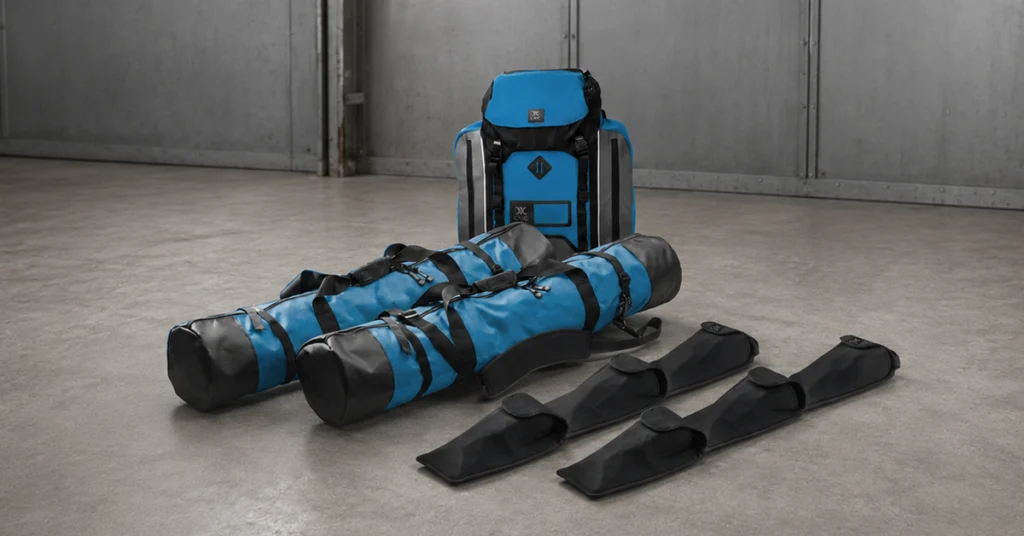
A pre-built confined space rescue kit can simplify procurement when it matches the application, and it lowers the odds of missing a major component at the purchasing stage.
| Option | Works well when | Check before buying |
|---|---|---|
| Pre-built kit | The entry type is typical and the kit components match the rescue plan | Tripod/davit fit, winch compatibility, harness needs, and documentation |
| Custom system | The site has unusual openings, offset access, limited clearance, or multiple space types | Component compatibility across the full system |
Confined Space Rescue Equipment List
Run this checklist before you finalize a purchase or request a quote:
- Tripod, davit, or other approved anchorage matched to the opening
- Confined space rescue winch, hoist, or retrieval device compatible with the anchorage
- Retrieval line with the correct setup for the entry path
- Confined space rescue harness or belt suited to retrieval use
- Connectors, brackets, and mounting hardware matched to the system
- Ventilation blower, ducting, or air system where required
- Gas or atmospheric monitoring equipment
- Manufacturer instructions and compatibility documentation
- Storage, transport, and inspection plan for the equipment
If you’re outfitting a department, plant, utility crew, or rescue team, always start with the space:
- Vertical or offset?
- Clear or obstructed?
- Shallow or deep?
- Simple or atmosphere-controlled?
Then build the system around that combination.
Columbus Supply Can Help!
We stock professional-grade industrial confined-space gear for safety managers and rescue professionals who want spec-aware buying support. When you’re ready to build the right setup, start here:
- Shop confined space rescue equipment
- Browse the broader industrial safety category
- Contact us to discuss a more customized setup for your situation
Frequently Asked Questions
A confined space rescue tripod is best suited to straight vertical access where the legs can sit securely around the opening. A davit arm is usually a better fit when the opening is offset, the footprint is tight, or the retrieval path needs to be positioned away from the edge.
A complete confined space rescue kit should include the anchorage structure, retrieval device, retrieval line, harness, and connectors needed to tie the system together. Many kits also need supporting items such as ventilation and atmospheric monitoring, depending on the hazards in the space.
Start with the entry type, line path, and how the rescue will actually be performed. The winch should mount cleanly to the support structure, control the entrant’s movement without awkward angles, and match the rest of the system. If the setup is hard to operate at the opening, it’s the wrong winch for that job.
Use a harness that is intended for retrieval and works with the lifting or lowering method you plan to use. Attachment point location, body position, and compatibility with the retrieval line matter more than generic fall-protection labeling. The harness should let the entrant move through the access point without unnecessary snag points or awkward fit.
Non-entry rescue is enough when the entrant can be retrieved from outside the space without adding risk to the rescuer or the entrant. That works best in spaces with clear vertical access and a retrieval path that stays open from entry through extraction. If the opening, obstruction, or layout prevents that, the rescue plan needs more than retrieval gear alone.
Check the opening size, available clearance, entry depth, and whether the anchorage will fit the work area. Then confirm that the tripod or davit, winch, harness, line, and connectors all work together as one system. If the site has multiple confined-space types, choose equipment based on the hardest access point, not the easiest one.