Key Takeaways
- Match sleds, throw bags, tubes, and flotation to whether your crew runs shoreline throws, on-ice access, or contact rescue.
- A throw bag is usually the first working tool, but longer distances and unstable conditions may still require flotation, victim support, or an access platform.
- Sled versus board is about fit.
- Build around rope control. Sleds, boards, tubes, and flotation should all work with your line-management plan.
When an ice rescue call comes in, you need the right equipment for the job. A throw bag, sled, rescue board, tube, and flotation device each serve a different purpose, from reaching the victim at a safer distance to getting them packaged and off the ice. Choosing equipment that can handle more than one job can also help keep the truck from filling up with gear that rarely gets used.
The right mix will depend on how your fire and rescue team responds, as well as the role each piece of equipment needs to fill. In this guide, we’ll look at how to choose sleds, throw bags, ropes, picks, tubes, and flotation for your team so you can build a setup that gives your crew the options they need on the ice.
What Is Ice & Water Rescue Equipment?
Ice and water rescue equipment includes the tools your crew needs to reach, secure, support, and remove a victim from ice or cold water. What you carry should reflect the types of rescues your crew handles: shore-based throw rescue, on-ice access, contact rescue, or flotation-supported work.
This guide covers sleds, boards, water rescue throw bags, ice rescue rope, rescue ice picks, tubes, and flotation. Immersion and survival suits are also used in many cold-water programs, but they need their own sizing and feature discussion, so we cover those separately in our immersion suit buying guide.
If you’re building or refreshing a seasonal cache, think through the sequence your crew will follow during a rescue:
- Reach first
- Access only when you have to
- Support the victim
- Remove them with a line-managed plan
The equipment you choose should support each part of this sequence.
Ice Rescue Sleds & Boards
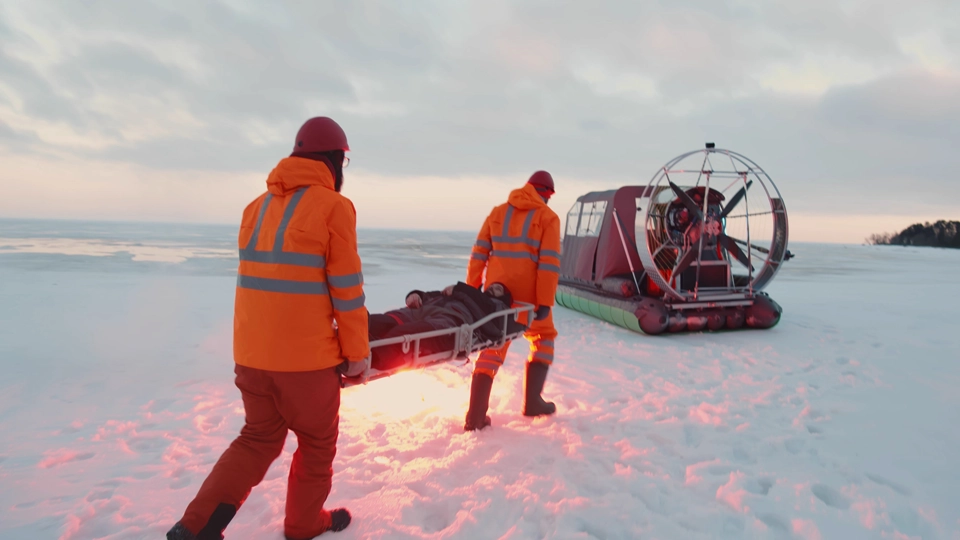
An ice rescue sled or board gives the rescuer a platform for approaching weak ice and moving the victim back toward shore. When choosing between a sled and a board, factor in your staffing, available storage, and how your crew plans to remove the victim.
| Tool | Best fit | What to look for |
|---|---|---|
| Ice rescue sled | On-ice approach and victim movement where a dedicated platform is preferred | Stable body shape, usable handles, tow points, and compatibility with rope control |
| Ice rescue board | Lower-profile access, patient support, and compact storage needs | Rigid construction, grab points, visibility, and ease of handling with gloved hands |
Ice calls are low-frequency for a lot of departments, so gear that’s easy to store and deploy without assembly can be a practical choice. If your department needs more than a single piece of equipment, you can also compare complete setups in the water rescue systems and kits category.
For a dedicated ice rescue platform, look at the Ice Rescue Systems RTS – Rapid Transport Ice Rescue Sled. It’s available as the sled only or with storage and tetherline options, giving teams flexibility to use it with the rest of their rope system.
Throw Bags & Rescue Ropes
Throw bags are often the first working tool at a cold-water rescue because they support reach-first operations from shore or stable footing. A throw bag can also back up an on-ice rescuer, a board, or a sled when the crew needs a controlled return path.
When you’re choosing rescue throw bags, look at how the bag handles when it’s wet and cold, how visible the line is, how easily you can re-throw it, and whether the rope length matches the ponds, retention basins, rivers, or shoreline hazards you cover. Don’t treat throw bags as a stand-in for the rest of the system. They’re designed to reach a victim from a distance but don’t replace flotation, victim support, or an access platform when a throw isn’t enough.
Rope may serve several purposes during an ice rescue, so match it to the job: shoreline throwing, tethering, hauling, or controlling a board or sled. Your first-arriving crew should also be able to deploy it easily in winter conditions.
Ice Picks, Awls & Personal Gear
Ice rescue picks and awls are small tools that can play an important role in a rescue. They help the rescuer with self-help and movement at the ice edge, especially when hands are wet, gloved, or working on a slick surface. Keep them with the rest of your water rescue gear where they’re easy to access, rather than buried in a general tool compartment.
When buying, focus on grip, visibility, tethering, and whether you can work the design with cold-weather gloves. Rescue ice picks work alongside training, flotation, and line control to give the rescuer another tool for moving and working safely on the ice.
Rescue Tubes (Lifeguard & Inflatable)
Rescue tubes give buoyancy and victim support during contact rescues. On the ice, they serve a different purpose than a sled or board. A tube supports the victim after contact, while a sled or board provides access and helps with removal.
Choose rescue tubes based on visibility, grip points, buoyant support, and how easily a rescuer can manage one while wearing cold-water PPE. Inflatable options can save storage space, while traditional lifeguard-style tubes are fast to grab and familiar to anyone with water rescue experience. The right choice depends on how your team expects to make contact and how fast the tube needs to deploy.
For contact rescue and victim support, compare the Kemp USA 50″ Rescue Tube and the Kemp USA 53″ Cut-A-Way Rescue Tube. The 50″ tube is a familiar standard rescue tube option, while the cut-a-way tube adds hand grips that may make it easier to manage during contact rescue.
Ice Rescue Boats & Flotation
Flotation tools give your team more options beyond a shore throw or short on-ice approach. Ring buoys, flotation devices, and inflatable rescue boats can support work at broken ice edges, open-water pockets, and cold-water incidents where a board or sled alone may not be enough.
| Equipment | Use case | Buyer consideration |
|---|---|---|
| Ring buoy / flotation device | Quick victim support from shore or nearby access point | Visibility, throwability, and storage location |
| Inflatable rescue boat | Broader water-edge incidents and unstable ice/open water conditions | Deployment time, crew requirements, inflation method, and transport space |
When choosing flotation, ring buoys & rescue boats, look at how the equipment will be carried, launched, controlled, and recovered. Your choice should also work with the throw bags, ropes, boards, and personal gear your team already uses.
Frequently Asked Questions
A practical ice rescue kit usually includes a rope or throw bag, an access tool such as an ice rescue sled or board, a buoyant support option like a rescue tube or flotation device, and small self-help gear such as ice picks or awls. The exact mix depends on whether your team is mainly doing shoreline throws, on-ice access, or contact rescue.
An ice rescue sled is usually chosen for controlled on-ice approach and moving a victim back toward shore, while an ice rescue board is often preferred when a lower-profile, rigid platform makes handling and storage easier.
Water rescue throw bags are used to get a rope to a victim quickly from shore or another stable point. They are useful when the rescuer shouldn’t commit to the ice or water, and they work best as part of a larger system that may also include flotation, a sled, or a board.
Yes, rescue ice picks can help a rescuer manage self-help and movement near the ice edge, especially when conditions are slick and gloves limit grip. They are a support tool, though, not a substitute for rope control, flotation, or proper access gear.
A rescue tube is a good choice when the team has made contact and needs buoyant support for the victim during the rescue. A sled is better when the operation depends on approaching weak ice and then moving the victim back in a controlled way.
The right amount depends on the size of the water hazards your crew faces and how the rope will be used. A shoreline throw, a tether for a sled, and a hauling line all have different needs, so the rope package should be selected around the department’s most likely calls rather than a single generic length.